The Ketamine Masterclass Part 2
The Recreational Ketamine Brain
From first experience to dependence — how repeated recreational exposure reshapes behavior, reward and risk, drawing on the January 2026 UK ACMD review of ketamine harms.
What this guide covers
Table of Contents
A progression, not a single event
The most useful way to understand recreational ketamine is as a progression:
first experiences → acute intoxication → reinforcement → repeated use → tolerance → escalating use → dependence → withdrawal/recovery.
Not everyone travels through all of these stages. The 2026 ACMD review emphasizes that many users consume ketamine intermittently, while a minority develop much more problematic, high-dose patterns.
Why would someone want the experience in the first place?
Ketamine’s recreational appeal isn’t primarily the classic stimulant rush of cocaine or the sedative relaxation of alcohol. People may be seeking some combination of dissociation, euphoria, sensory alteration, emotional detachment, altered perception of time and space, reduced self-consciousness, novelty, escape from psychological distress, or the social experience surrounding clubs, festivals or parties.
The 2026 ACMD review identifies low cost, accessibility, perceived pharmaceutical quality, increasing social acceptability, rapid recovery and perceived mental-health benefits among reported motivations.
Some recreational users aren’t thinking “I want to get intoxicated.” They’re thinking “I want to get away from how I feel.” That distinction becomes important once we get to dependence.
Acute ketamine intoxication isn't simply “being high”
The characteristic experience is dissociation. Normally the brain combines visual information, sound, touch, body position, memory, emotional state and sense of self into one coherent experience. Ketamine can disrupt that integration, producing a separation between “me” and “my body/environment.” At lower levels, this may be subtle. At greater intoxication it can become profound. Observing oneself from outside, moving through an unreal environment, or existing in an internally generated world.
Why the K-hole can be so psychologically powerful
At extreme dissociation, ordinary sensory information becomes much less dominant and internal experience becomes extraordinarily salient. That is, intense visual imagery, unusual spatial experiences, distorted time, body detachment, dreamlike states, perceived separation from reality. The experience can be pleasurable for one person and frightening for another. Ketamine doesn’t reliably produce one particular psychological experience. Set, setting, expectations, previous experience, mental state and other substances all influence what happens.
The first major danger: judgment disappears before the person realizes it
One of ketamine’s most important recreational effects is impairment of situational awareness and psychomotor performance. Someone may believe “I’m okay” while objectively being substantially impaired. The ACMD specifically identifies increased risk of falls, accidental injury, fights, jumping from heights, impaired driving, drowning, and sexual exploitation during intoxication. This is why ketamine can be particularly problematic in environments such as clubs, festivals, swimming, traffic, heights and unfamiliar environments, the environment matters enormously.
The paradox: less anxiety does not mean greater safety
Ketamine can make someone feel emotionally detached while simultaneously making them physically vulnerable. A person might not experience the fear response they normally would, but their coordination and ability to assess danger may be impaired. Less anxiety ≠ greater safety.
How Repeated Use Becomes Reinforcing
The brain learns that the experience was valuable
Suppose someone experiences ketamine → pleasurable dissociation → relief. The brain learns that the experience was valuable. The next time the person encounters stress, boredom, anxiety, loneliness, social pressure or emotional pain, the memory of ketamine can become relevant. This is reinforcement learning. The drug doesn’t need to produce enormous physical withdrawal for this process to occur. The person can simply learn “Ketamine makes this feeling go away.”
The emotional escape pathway
Consider two hypothetical users. User A uses occasionally at festivals because they enjoy the altered state. User B uses whenever they feel emotionally overwhelmed. User B has a potentially more dangerous psychological relationship with the drug, because ketamine has become an emotion-regulation strategy. That is;
negative emotional state → ketamine → dissociation → temporary relief → negative emotional state returns → ketamine again.
That’s fundamentally different from occasional novelty-seeking.
Where “self-medication” enters
The 2026 ACMD review reports increasing use among people using ketamine to manage psychological distress, including vulnerable populations. This creates overlap between recreational ketamine and medical ketamine. Someone may discover through personal experience that it makes their depression, anxiety or trauma temporarily disappear. But that does not mean uncontrolled recreational ketamine is equivalent to clinical treatment: the exposure patterns, monitoring, screening, formulation and therapeutic context are radically different.
Tolerance changes the equation
With repeated exposure, some users develop tolerance: the original experience becomes less intense, producing “I need more to get where I used to get.” The ACMD describes dose escalation arising from increasing tolerance among problematic users. The person isn’t thinking “I want to damage my bladder” — they’re thinking “the amount I used to take doesn’t work anymore.” But increasing exposure increases cumulative physiological burden.
Frequency may matter more than people realize
Compare occasional exposure separated by long periods with repeated exposure throughout the week. Even if individual experiences seem similar, cumulative exposure is dramatically different. One systematic comparison estimated more than 90-fold greater cumulative exposure in heavy recreational users compared with medically treated patients in the studies examined, helping explain why medical ketamine ≠ recreational ketamine, even though it’s the same fundamental drug.
The Transition From Recreational Use to Dependence
There’s no magical moment when somebody suddenly becomes “addicted.” It can be gradual:
- “This is fun.”
- “I'll do it again.”
- “I really like this.”
- “I use it most weekends.”
- “I need more than before.”
- “I use it during the week too.”
- “I feel uncomfortable without it.”
- “I can't stop even though it's causing problems.”
That last stage is fundamentally different from recreational experimentation. The ACMD estimates that around 5–8% of respondents to its call for evidence described problematic use involving high doses and, in some cases, daily use. A minority, not the typical pattern of all ketamine users.
What does dependence actually mean here?
Dependence can involve craving, compulsive use, tolerance, difficulty cutting down, continued use despite harm, using to relieve distress, and withdrawal symptoms after stopping. Current evidence supports ketamine dependence as a genuine clinical problem and the scientific understanding here has changed. Older literature sometimes characterized ketamine dependence as primarily psychological, with little evidence of a conventional physical withdrawal syndrome. More recent evidence and the 2026 ACMD review recognize withdrawal symptoms lasting several days after heavy use is stopped, so that older description needs updating rather than repeating.
What might withdrawal look like?
The evidence isn’t nearly as developed as it is for opioids or alcohol. Reported withdrawal phenomena can include anxiety, low mood, irritability, restlessness, sleep disturbance, cravings, fatigue and physical discomfort. The exact syndrome and its biological basis remain poorly characterized, an important research gap.
A 2024 systematic review found only 12 studies involving 368 participants addressing pharmacological treatment of ketamine use disorder, rating the evidence as very low quality. Anyone claiming we have a well-established medical protocol for ketamine withdrawal is overstating the evidence.
What Repeated Use Does to the Brain
The brain during repeated use
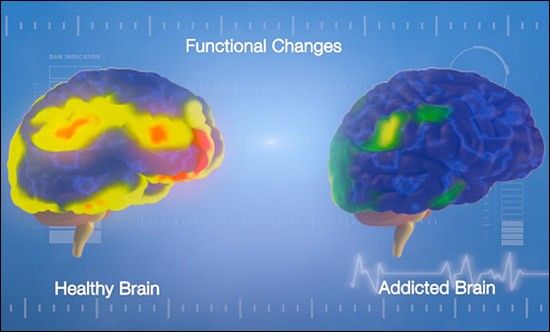
Repeated exposure doesn’t mean the brain experiences the same acute effect over and over. The nervous system is adaptive, responding to repeated pharmacological perturbation by changing receptor signaling, network activity and reward processing. Research has examined changes involving glutamate, dopamine, prefrontal cortex, hippocampus, mesolimbic reward circuitry and stress systems.
The general process: drug repeatedly pushes the system → brain adapts → baseline state changes → drug becomes increasingly important for achieving the desired state. That pattern is common across addictive drugs, though the exact biology differs.
The reward system and cue-conditioned craving
The mesolimbic reward system continuously asks, in effect, “was that experience worth repeating?” Pleasurable or relieving experiences strengthen associations between drug, environment, emotional state and memory. So eventually the trigger might not be the ketamine itself but a particular nightclub, a group of friends, a song, Friday night, a messaging group, or a particular emotional state. Those cues can trigger craving. This is called cue-conditioned craving.
Why addiction isn't simply “wanting the drug”
Someone can intellectually know “this is damaging me” while simultaneously experiencing “I really want it.” Those are different brain processes. The prefrontal cortex handles planning, inhibition and decision-making, while reward circuitry pushes toward immediate reinforcement. Addiction can involve a growing imbalance between long-term consequences and immediate reward/relief. Research into ketamine dependence specifically examines prefrontal, hippocampal and mesolimbic circuitry in this context.
Memory: interesting and complicated
The hippocampus is central to learning and memory. Frequent recreational ketamine use has been associated with cognitive problems, particularly memory and executive functioning, in some studies. But a heavy ketamine user might also use cannabis, alcohol, stimulants or MDMA, and may have depression, anxiety or sleep problems; so “heavy users perform worse on memory tests” doesn’t automatically mean “ketamine permanently destroyed their memory.” A systematic review nevertheless found cognitive and mental disorders among harms associated with heavy recreational use, often related to dose.
The psychiatric paradox
Ketamine can produce rapid antidepressant effects under controlled medical conditions, while chronic recreational use can be associated with depression, anxiety, paranoia and other psychiatric symptoms. That isn’t necessarily contradictory. The exposure patterns are fundamentally different but it raises a real question: “could repeated disruption of glutamatergic networks eventually produce a very different outcome from carefully controlled therapeutic exposure?” That remains an important research question.
Psychosis and paranoia
Heavy use has been associated with psychotic-like symptoms in some users, including paranoia, suspiciousness, perceptual disturbances, disorganized thinking and unusual beliefs. Causality needs caution. Someone using ketamine heavily may already have psychiatric vulnerability, and ketamine can also interact with sleep deprivation and other drugs. The evidence supports concern without allowing the conclusion that ketamine inevitably causes schizophrenia or permanent psychosis.
The Social Dimension
The social brain
Ketamine doesn’t only affect an individual chemically, it can change the social environment surrounding them. Occasional use might be embedded in friends, nightlife, music, social bonding and shared experience. Heavy use can eventually produce a drug-centered social life, isolation, relationship damage, financial problems and reduced employment/education.
The ACMD specifically identifies reduced sociability, damaged relationships, educational/employment impacts, isolation and debt among social harms associated with heavy prolonged use. That’s a very different trajectory from the stereotypical image of someone simply “taking too much ketamine.”
Ketamine and sex
Ketamine can appear in sexualized drug-use contexts, including chemsex. The ACMD notes its use in chemsex settings, particularly among some gay, bisexual and other men who have sex with men. The important point is the pharmacology and environment, not the identity of the people involved.
Dissociation can reduce situational awareness, judgment, ability to communicate, ability to assess consent, and awareness of physical injury. And risk can increase further when multiple substances are involved. The ACMD connects chemsex-associated drug use with higher-risk sexual behavior and increased STI risk.
A particularly serious social issue: consent
Ketamine can impair the ability to provide meaningful consent, creating two distinct dangers: the intoxicated person may become vulnerable to sexual exploitation, and another intoxicated person may misinterpret impaired behavior or communication.
The ACMD explicitly notes ketamine’s potential role in drug-facilitated sexual assault and its ability to impair capacity to consent. Recreational ketamine isn’t simply a question of personal health — there can be consequences for other people as well.
Why people sometimes underestimate the danger
Ketamine can acquire a reputation for being pharmaceutical, relatively clean, short-acting, less addictive than some drugs, free of a severe hangover, and used medically. The ACMD identifies perceived pharmaceutical quality and lack of hangover as factors contributing to its appeal.
But pharmaceutical origin does not equal harmlessness morphine, fentanyl and propofol are all pharmaceutical too. Ketamine being a legitimate medicine says something about its usefulness under controlled conditions, not that uncontrolled use is safe.
Environment, Other Drugs and Supply
The biggest environmental danger: driving
Ketamine impairs psychomotor performance and situational awareness. The 2026 ACMD report notes ketamine above the legal limit in 29 UK fatal road-traffic collision cases from 2014–2018, about 1% of fatalities for which drug data were available (other substances may also have contributed in some cases). A drug doesn’t have to cause respiratory arrest to kill someone. Impaired judgment plus impaired coordination plus a vehicle can produce a catastrophic outcome.
The role of other drugs
People frequently don’t use drugs in isolation. The ACMD specifically warns about combining ketamine with alcohol, opioids or benzodiazepines, which can substantially increase adverse effects. Understanding deaths or medical emergencies associated with recreational ketamine requires asking what else was in the person’s system, rather than simply how dangerous ketamine is on its own.
The supply problem
Illicit ketamine isn’t necessarily pharmaceutical-grade. The ACMD notes concerns about inconsistent purity and adulteration of illicit products. A person may believe they’re taking ketamine without actually knowing the concentration, purity, contaminants, adulterants or actual amount present. This makes illicit exposure fundamentally different from a measured pharmaceutical preparation.
The Escalation Loop
Putting it all together, a potentially problematic trajectory might look like:
- Novelty — “I like the dissociation.”
- Reward — “I'll do it again.”
- Cue conditioning — “Friday/nightlife = ketamine.”
- Tolerance — “The old amount isn't enough.”
- Escalation — “Now I'm using more frequently.”
- Emotional regulation — “I need it when I'm stressed.”
- Dependence — “I don't feel right without it.”
- Physical/social consequences — “Despite the consequences, I keep using.”
That final stage is where recreational use has become a substance-use disorder rather than simply recreational drug use.
But don't make the opposite mistake
It’s equally important not to conclude that anyone who uses ketamine recreationally is an addict, the evidence doesn’t support that. The 2026 ACMD review explicitly distinguishes the large population of intermittent users from the minority who develop high-dose, dependent patterns. Most users are not severely dependent users, but a minority can develop very serious dependence and organ damage.
What happens when someone stops?
This is one of the least understood areas. For heavy users, stopping can produce a period of craving, emotional discomfort, sleep disturbance, anxiety/irritability and low mood, among potentially other symptoms. Ketamine withdrawal generally isn’t viewed in the same category of medical danger as severe alcohol or benzodiazepine withdrawal. But that doesn’t make it trivial, and treatment research is surprisingly immature.
The systematic review mentioned earlier found only 12 pharmacological-treatment studies with 368 total participants, with very low-quality evidence. We know considerably more about how ketamine can treat depression than about how best to treat severe ketamine dependence.
The Most Interesting Paradox of All
Ketamine is simultaneously a drug that can rapidly relieve depression, and a drug that can become a maladaptive way of escaping emotional distress. The difference isn’t the molecule, it’s the entire therapeutic environment.
Medical Model
- Screening
- Controlled pharmaceutical product
- Controlled administration
- Monitoring
- Clinical indication
- Follow-up
- Psychotherapy / other treatment when appropriate
Recreational Dependence Model
- Uncontrolled exposure
- Uncertain product
- Repeated reinforcement
- Tolerance
- Emotional escape
- Escalating frequency
- Impaired functioning
- Dependence
5–8%
of ACMD survey respondents described problematic, high-dose (sometimes daily) use
90x
greater estimated cumulative exposure in heavy recreational users vs. treated medical patients, in one comparison
29
UK fatal road-traffic collisions (2014–2018) with ketamine above the legal limit
12 studies / 368
participants total in trials of pharmacological treatment for ketamine use disorder, rated very low quality
Where Part 2 Connects to Part 3
We’ve now explained why repeated recreational exposure can become problematic at the brain/behavioral level. But there is another extraordinary feature of ketamine: the brain isn’t necessarily the organ that ultimately causes the most devastating chronic consequences. For heavy users, some of the strongest evidence concerns the bladder → ureters → kidneys, and increasingly the liver → bile ducts. The 2026 ACMD review specifically describes significant long-term adverse effects involving all of these systems.
Frequently Asked Questions
Find out more about this chapter on Ketamine with the help of direct questions from other curious brains
Why do people take ketamine recreationally?
People report a variety of motivations, including:
- curiosity
- altered consciousness
- dissociation
- euphoria
- social experiences
- escape from unpleasant emotions
- experimentation
- sensation seeking
- perceived stress relief
- seeking unusual or “out-of-body” experiences.
Motivation matters because recreational use isn’t necessarily driven by the same thing in every person. Someone experimenting at a party and someone repeatedly using ketamine to escape emotional distress may be taking the same substance but following very different psychological pathways.
Why does ketamine appeal to some people socially?
Ketamine can alter:
- sensory perception
- emotional intensity
- body awareness
- inhibition
- social perception.
Some users describe feeling detached from ordinary worries or less concerned about social judgment. That can make the drug appealing in certain social environments. However, the same dissociation that can feel pleasant can also impair communication, coordination and judgment.
Why do some people describe ketamine as euphoric?
Ketamine can produce a mixture of dissociation, sensory alteration, emotional detachment, stimulation, perceptual changes. For some people this combination is pleasurable. Others find it uncomfortable, frightening or emotionally neutral. There isn’t a universal “ketamine high.”
Why would someone enjoy feeling disconnected from their body?
For some people, temporary separation from ordinary bodily awareness can feel:
- relaxing
- freeing
- interesting
- emotionally distant
- peaceful.
Someone experiencing psychological distress may particularly value the feeling of being temporarily removed from ordinary thoughts and emotions. That same mechanism can become problematic if the person begins relying on ketamine as their primary way of escaping distress.
What does ketamine intoxication feel like?
Experiences vary widely. Commonly reported effects include:
- altered perception
- detachment
- floating sensations
- impaired coordination
- distorted time
- changes in sound and vision
- reduced sensitivity to pain
- dreamlike thinking
- emotional distance
- confusion at higher exposure.
At stronger levels, consciousness can become profoundly altered.
Why do people describe ketamine as "dreamlike"?
Ketamine can disrupt the normal integration of external sensory information, memory, internal thought and body awareness.
The brain continues generating perceptions and thoughts, but their relationship to the external world can become less stable. The resulting experience can resemble dreaming while the person is technically awake.
Can ketamine make reality feel unreal?
Yes. This can involve derealization, the sensation that the external environment is strangely unreal, distant or artificial. A person may recognize intellectually that the environment is real while experiencing it as profoundly unfamiliar.
Can ketamine make you feel unreal?
Yes. This is known as depersonalization when the altered experience primarily concerns the self.
Someone may feel: “I don’t feel like myself.” or feel detached from their body, thoughts or emotions.
Can ketamine cause hallucinations?
It can cause hallucination-like or internally generated perceptual experiences. But ketamine isn’t pharmacologically identical to classical psychedelics. Its unusual perceptions often occur alongside dissociation, sensory disconnection and altered consciousness.
What is a K-hole?
“K-hole” is informal terminology for an extremely profound ketamine-induced dissociative state.
It may involve:
- extremely reduced awareness of the environment
- inability to move normally
- profound detachment from the body
- altered identity
- intense internal imagery
- distortion of time and space.
It isn’t a formal medical diagnosis.
Is a K-hole dangerous?
It can be. The danger isn’t necessarily that dissociation itself always causes physical injury.
The major concern is that profound impairment can leave someone unable to:
- recognize hazards
- communicate
- protect themselves
- respond appropriately to vomiting or airway problems
- recognize an emergency.
Risk also increases substantially when other drugs are involved.
Can someone become unconscious from ketamine?
Yes. At sufficiently high exposure, ketamine can produce profound loss of consciousness and anesthesia. The boundary between intense dissociation and anesthesia isn’t a simple numerical threshold.
Can someone die from ketamine?
Ketamine can contribute to fatal outcomes, although fatal toxicity from ketamine alone is less characteristic than with some other drugs. The risk becomes substantially more concerning when ketamine is combined with other substances, especially central nervous system depressants. Accidents, aspiration, impaired judgment and dangerous environments can also contribute to deaths associated with ketamine.
Is ketamine like being drunk?
Not really. Alcohol primarily affects multiple inhibitory/excitatory systems, particularly GABA and glutamate signaling. Ketamine’s defining pharmacology involves NMDA receptor antagonism.
Alcohol intoxication often produces disinhibition, sedation and impaired judgment.
Ketamine more characteristically produces dissociation, altered sensory integration, analgesia and unusual consciousness.
They can overlap, but the subjective states are fundamentally different.
Is ketamine like being asleep?
Not exactly. Sleep is an organized biological state involving characteristic brain activity and cycling through sleep stages. Ketamine can produce profound alterations in consciousness while the brain remains in a pharmacologically altered state that isn’t equivalent to normal sleep.
Is ketamine like dreaming?
It can feel dreamlike. But dreaming normally occurs within sleep. Ketamine can generate dreamlike internal experiences while someone is awake or partially conscious.
Why can five minutes feel like an hour?
Our perception of time is constructed by the brain.
Ketamine can alter:
- attention
- memory encoding
- sensory processing
- prediction
- self-awareness.
When those systems change, subjective time can become dramatically distorted.
Why can people forget parts of the experience?
Ketamine can disrupt memory formation and integration, particularly at stronger levels of intoxication.
A person may remember:
before → fragment → fragment → after
rather than a continuous narrative.
Why can ketamine become psychologically reinforcing?
A drug becomes reinforcing when its effects increase the likelihood that someone will want to repeat the behavior.
Ketamine can be reinforcing because it may provide pleasure, relief, escape or novelty.
Importantly, relief from negative emotional states can itself be highly reinforcing.
Is pleasure the only thing that causes addiction?
No. One of the most important concepts in addiction science is negative reinforcement. That means A behavior becomes more likely because it removes something unpleasant.
For example:
distress → ketamine → temporary emotional escape
The person may eventually seek ketamine not because the experience is extraordinarily pleasurable, but because being without it feels worse.
Can someone become psychologically dependent on dissociation?
Yes, a person may gradually learn:
stress → dissociate
anxiety → dissociate
sadness → dissociate
social discomfort → dissociate
Eventually ketamine can become a learned coping mechanism. That is psychologically important even before severe physical dependence develops.
Does ketamine tolerance develop?
Yes. Repeated exposure can produce tolerance to some effects. The brain adapts to repeated pharmacological stimulation. However, tolerance isn’t identical across every effect, and the relationship between tolerance and ketamine dependence is complex.
Why does tolerance matter?
Tolerance can create a dangerous psychological cycle:
same exposure → weaker effect
↓
desire for stronger effect
↓
increased exposure
↓
greater risk
This is one mechanism through which recreational use can escalate.
Does tolerance mean the drug is becoming safer?
Absolutely not. This is a crucial misconception. A person may become more accustomed to the subjective effects while still accumulating biological harm. In other words: Feeling less intoxicated doesn’t necessarily mean experiencing less physiological exposure.
Can ketamine cause dependence?
Yes, repeated recreational ketamine exposure can lead to ketamine use disorder/problematic ketamine use, including psychological dependence and withdrawal symptoms. The risk varies substantially between individuals.
What is ketamine dependence?
Dependence means that the person’s brain and behavior have adapted to repeated exposure such that reducing or stopping use can produce:
- cravings
- irritability
- anxiety
- low mood
- sleep disturbance
- restlessness
- strong desire to use again.
Dependence is different from simply enjoying a drug.
Is ketamine physically addictive like heroin?
The comparison isn’t particularly useful. Different drugs produce different forms of dependence. Opioid dependence can involve severe autonomic and gastrointestinal withdrawal.
Ketamine withdrawal may be more characterized by craving, mood disturbance, anxiety, sleep problems and psychological discomfort.
That doesn’t make it harmless.
Can someone become addicted without using ketamine every day?
Yes, addiction isn’t defined solely by daily use. The important question is whether use becomes compulsive, difficult to control, harmful or prioritized over important aspects of life.
How can someone tell if recreational ketamine use is becoming a problem?
Potential warning signs include:
- repeatedly using more than intended
- unsuccessful attempts to cut down
- thinking about ketamine frequently
- spending substantial time obtaining or recovering from use
- using despite physical problems
- using despite psychological problems
- neglecting work or relationships
- needing ketamine to feel normal
- continuing despite urinary symptoms
- hiding use from others
- increasingly using alone
- using primarily to escape emotional distress.
The more of these patterns present, the more concerning the situation becomes.
Is using ketamine alone a sign of addiction?
Not necessarily, but a shift from social/occasional experimentation to private/solitary/compulsive use can be an important warning sign. Context matters.
Is craving ketamine the same as addiction?
No, a person can experience cravings without meeting criteria for a substance-use disorder. Addiction involves a broader pattern of impaired control and continued use despite consequences.
What happens when a frequent ketamine user stops?
Withdrawal experiences vary. Some people report low mood, anxiety, irritability, insomnia, restlessness, fatigue, cravings, difficulty concentrating.
The intensity depends partly on how heavily and frequently the person has been using.
Can ketamine withdrawal be dangerous?
Ketamine withdrawal is generally different from withdrawal from substances such as alcohol or benzodiazepines, where abrupt cessation in dependent individuals can potentially become medically dangerous.
However, psychological symptoms can be significant, and people with severe or prolonged use may benefit from professional support.
How long does ketamine withdrawal last?
There isn’t one universal timeline. Withdrawal experiences depend on:
- duration of use
- frequency
- cumulative exposure
- individual biology
- other substances
- mental-health status.
Some symptoms may resolve relatively quickly, while cravings or psychological effects can persist longer.
Why is mixing ketamine with alcohol dangerous?
Both can impair consciousness, coordination and judgment.
Combining them can increase the likelihood of profound sedation, vomiting, accidents and potentially dangerous respiratory effects.
The combination can be substantially less predictable than either substance alone.
Why is ketamine + opioids particularly concerning?
Both can contribute to CNS depression. A person may become more sedated than expected, with increased risk of respiratory compromise. This is particularly concerning because opioids themselves can suppress respiratory drive.
What about ketamine + benzodiazepines?
Benzodiazepines are CNS depressants. Combining them with ketamine can increase sedation and impair cognition and coordination. In medical settings, clinicians take such interactions into account.
What about ketamine + stimulants?
This creates a different problem. Stimulants can increase heart rate, blood pressure, cardiovascular stress.
Ketamine can also affect cardiovascular function.
Combining substances with opposing or overlapping effects can make the overall physiological response difficult to predict.
Why is polydrug use so important when studying ketamine deaths?
Because toxicology reports can show multiple substances. If someone has ketamine + alcohol + opioid, it becomes much more difficult to attribute the outcome to ketamine alone. This is one reason recreational-drug epidemiology is complicated.
Does the environment influence a ketamine experience?
Yes. Psychological state and environment can strongly influence subjective drug experiences.
Factors include:
- emotional state
- expectations
- surroundings
- social group
- perceived safety
- sensory stimulation.
This is sometimes discussed using the broader concept of set and setting.
Why can the same person have a good experience one time and a terrible experience another time?
Because the experience isn’t determined solely by the molecule.
Changes in mood, stress, expectations, environment, sleep, other substances or physical condition can change the experience substantially.
Can ketamine trigger panic?
Yes, profound alterations in consciousness can be frightening.
Someone who doesn’t understand what is happening may interpret dissociation as “I’m dying.”
That fear can amplify the experience.
Does ketamine affect sexual behavior?
It can alter:
- inhibition
- perception
- body awareness
- judgment
- coordination.
That can influence sexual behavior. The bigger concern is that significant intoxication can impair someone’s ability to make informed decisions and recognize boundaries.
Can ketamine be involved in sexual assault?
Yes. Ketamine has unfortunately been associated with drug-facilitated sexual assault because severe intoxication can produce:
- confusion
- amnesia
- impaired mobility
- reduced ability to communicate.
However, it’s important not to imply that ketamine is uniquely responsible for drug-facilitated assault; alcohol and other substances are also frequently involved.
Why are accidents a major ketamine risk?
Dissociation can impair balance, reaction time, spatial awareness, judgment and pain perception. Someone may therefore fail to recognize danger or injury.
A person who normally wouldn’t walk into traffic, fall from a height or operate machinery while impaired might do so when severely dissociated.
Can ketamine mask an injury?
Yes, because ketamine produces analgesia, a person may experience reduced pain while injured. That can delay recognition of an injury.
Can someone vomit while heavily intoxicated?
Yes. Any state involving significantly impaired consciousness can create aspiration concerns if vomiting occurs. That’s one reason profound intoxication should be treated as a medical safety issue rather than simply “being high.”
What urinary symptoms can heavy ketamine use cause?
Potential symptoms include:
- needing to urinate unusually often
- urgency
- painful urination
- bladder/pelvic pain
- nighttime urination
- blood in urine
- urinary incontinence.
Persistent symptoms deserve medical evaluation.
Why do recreational users sometimes ignore urinary symptoms?
Because early symptoms can seem relatively minor. Someone might think
“I’m just drinking more water.” or:
“I always have to pee when I’m using.”
But persistent urinary symptoms can be an early warning of ketamine-associated uropathy.
Why is using ketamine to escape emotions particularly risky?
Because the drug becomes a coping strategy.
Instead of:
sadness → process sadness
the learned response can become:
sadness → ketamine → emotional escape.
The person may therefore become less practiced at tolerating or processing difficult emotional states without the drug.
Can someone use ketamine recreationally without becoming addicted?
Yes. Many people who experiment with psychoactive substances do not develop substance-use disorders.
Risk isn’t binary. It’s better understood as a continuum:
experimental → occasional → regular → problematic → compulsive/dependent
with substantial individual variation
Is ketamine primarily a party drug?
Not necessarily. Ketamine has appeared in several different social contexts:
- club culture
- nightlife
- festival environments
- private recreational use
- experimental drug communities
- medical/therapeutic environments.
Its cultural meaning varies considerably between countries and communities.
Why is ketamine sometimes associated with nightlife?
Its combination of altered perception, dissociation, stimulation and unusual sensory experiences can make it attractive in certain nightlife environments. But the same effects can become dangerous in crowded environments where coordination and situational awareness matter.
Why do some users describe ketamine as emotionally "clean"?
Some people experience ketamine as producing emotional distance rather than the emotional amplification associated with certain other drugs.
That can feel attractive to someone who wants:
less thinking
less anxiety
less emotional pain.
But repeated reliance on emotional detachment can become psychologically problematic.
Is recreational ketamine pharmacologically identical to medical ketamine?
The molecule can be the same, but the exposure context is radically different.
Medical treatment typically involves:
- known pharmaceutical material
- controlled administration
- defined indication
- screening
- monitoring
- follow-up.
Recreational use can involve:
- uncertain composition
- unpredictable exposure
- uncontrolled frequency
- polydrug use
- no medical monitoring.
Therefore “Medical ketamine is used safely” does not mean uncontrolled recreational use is safe.
Does pharmaceutical purity eliminate ketamine's risks?
No. Purity removes one category of uncertainty.
It does not eliminate:
- dissociation
- cardiovascular effects
- impaired coordination
- abuse potential
- urinary toxicity with prolonged heavy exposure
- drug interactions.
How can ketamine create a self-reinforcing cycle?
Consider Stress → ketamine → temporary relief → brain learns that ketamine reduces distress → stress returns → craving → ketamine again
Over time, the person may increasingly use the drug not to feel exceptionally good but simply to avoid feeling bad. That’s a classic pathway through which reinforcement can contribute to problematic substance use.
Is ketamine inherently addictive?
No drug is best understood as simply “addictive” or “non-addictive.” Ketamine has abuse and dependence potential, but the probability and severity of problematic use vary by person and exposure pattern.
Is occasional ketamine use automatically dangerous?
Not necessarily. But “not automatically dangerous” is different from “risk-free.”
Even occasional intoxication can produce:
- impaired coordination
- accidents
- confusion
- dangerous interactions.
Chronic heavy use introduces an additional set of risks, particularly urinary and potentially hepatobiliary injury.
Is recreational ketamine safer than opioids?
Different drugs produce different risks. Opioids have particularly high risk of fatal respiratory depression. Ketamine has a different profile involving dissociation, accidents, interactions, dependence and characteristic chronic urinary toxicity. Comparing them simply as “safe vs dangerous” misses the important pharmacology.
Is ketamine safer than alcohol?
Alcohol has enormous population-level health consequences because of its widespread use and chronic effects. Ketamine has a different and generally less common pattern of harms.
The appropriate comparison depends on whether we’re talking about acute overdose, chronic organ toxicity, dependence, accidents, population-level harm or another outcome.
Coming Next: Part 3 — Ketamine Toxicity From the Inside Out
- Part 1 — What ketamine actually does to the brain
- Part 3 — Ketamine Toxicity: From bladder to brain
- Part 4 — Medical Ketamine
Sources
- Ketamine: an updated review of use and harms (accessible) — GOV.UK / ACMD (2026)
- Ketamine — an updated review of use and harms: Annexes / evidence pack — GOV.UK Assets
- Harm related to recreational ketamine use and its relevance for the clinical use of ketamine: a systematic review and comparison study — PubMed
- The nonmedical use of ketamine, part two: A review of problem use and dependence — PubMed
- The Pharmacological Management of Ketamine Use Disorder: A Systematic Review — PMC
- Neurobiological Mechanisms of Ketamine Use, its Addiction, and Withdrawal: A Mini Review — PubMed
This page is educational and does not provide dosing or use guidance. If you or someone you know is struggling with ketamine or another substance, speak with a doctor or a local drug-treatment service.