
The Ketamine Masterclass Part 1
Part 1 — What ketamine actually does to the brain, why chronic use can damage the body, and why the same molecule can be both a rapid-acting antidepressant and a drug of dependence.
A pillar guide distinguishing established findings from hypotheses where the science is still unsettled.
What this guide covers
Table of Contents
Part 1: The Core Mechanism
Most people first encounter ketamine through the phrase “NMDA receptor antagonist.” That’s true, but on its own it explains very little. Here’s the fuller picture.
The central character: glutamate
The brain’s major excitatory neurotransmitter is glutamate, which signals through several receptor families. Particularly NMDA receptors, AMPA receptors, and kainate receptors. Ketamine primarily interferes with NMDA receptors: it is an open-channel blocker, meaning it enters and blocks the receptor’s ion channel while that channel is active.
The paradox: ketamine blocks an excitatory receptor, yet can produce increased downstream excitatory signaling.
The disinhibition model
One influential model focuses on inhibitory GABA interneurons, which act as a brake in the circuit:
Glutamate neuron → GABA interneuron → glutamate neuron.
- Ketamine blocks NMDA receptors on inhibitory interneurons
- The interneuron becomes less active
- Less GABA is released
- The excitatory neuron becomes disinhibited
- More glutamate becomes available, stimulating AMPA receptors
So, paradoxically: NMDA blockade → disinhibition → increased glutamate/AMPA signaling. This is a leading explanation for ketamine’s rapid effects, though the precise circuit-level mechanism remains an active research question.
AMPA: an underrated star of the story
A major hypothesis holds that increased AMPA signaling downstream of NMDA blockade is important for the antidepressant effect:
ketamine → NMDA modulation → glutamate changes → AMPA activation → intracellular signaling → increased synaptic plasticity → potentially improved neural circuit function.
The 2024 Neuropsychopharmacology review specifically highlights the convergence of NMDA blockade, glutamate signaling, AMPA receptors, BDNF-TrkB and synaptic plasticity.
BDNF: the next major character
BDNF (brain-derived neurotrophic factor) is involved in neuronal growth, survival, learning and synaptic plasticity. Ketamine appears capable of increasing BDNF-related signaling via a pathway roughly like:
NMDA blockade → changes in eEF2 kinase/eEF2 signaling → increased translation of BDNF → BDNF activates TrkB receptors → synaptic plasticity, often involving mTORC1 signaling that regulates protein synthesis for synaptic remodeling.
This is one reason scientists became so interested in ketamine. It doesn’t merely chang neurotransmitter levels. It appears capable of producing rapid changes in synaptic function.
What “neuroplasticity” actually means
Ketamine clinics often say ketamine “rewires the brain.” That’s an oversimplification.
Neuroplasticity broadly means the nervous system’s ability to change its structure or function in response to activity and experience. Ketamine appears capable of temporarily altering the conditions under which synapses can change. Sometimes described as opening a plasticity window. It does not mean a single dose permanently rewires the brain. The relationship between ketamine-induced plasticity, psychotherapy, behavior and long-term outcomes remains an active research area.
A theory this explains: ketamine-assisted psychotherapy
In severe depression, entrenched patterns of negative self-evaluation, rumination, avoidance, hopelessness, emotional rigidity can become very stable. If ketamine temporarily creates a biological state conducive to plasticity and psychotherapy or behavioral experience around that window supplies new information, the result could be strengthened adaptive circuits. This is why ketamine-assisted psychotherapy is scientifically interesting but it remains a hypothesis-driven treatment model, not proof that every session permanently rewires someone.
Part 2: Dissociation and the K-Hole
What dissociation actually is
Ketamine can profoundly alter how the brain integrates sensory information, body signals, spatial information, self-awareness, memory and environmental awareness. The result is dissociation, a sense of being present but not really in one’s body, or of the world happening while being observed from somewhere else. At stronger exposure this can become extremely intense, which is the basis of the recreational phenomenon known as a K-hole.
Why ketamine is so different from classical psychedelics
LSD and psilocybin primarily involve 5-HT2A serotonin receptor signaling. Ketamine primarily involves NMDA/glutamatergic signaling. All three can dramatically alter consciousness through substantially different pharmacology, which is why ketamine is best classified as a dissociative anesthetic rather than simply another psychedelic.
Part 3: Reward, Tolerance and Dependence
The dopamine / reward system
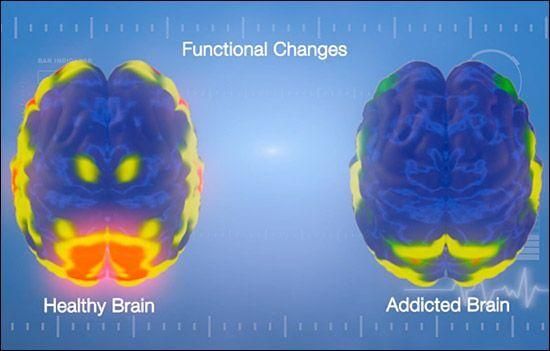
Ketamine isn’t exclusively a glutamate story. Research also implicates reward circuitry and dopamine in its reinforcing properties. This is particularly relevant to recreational use:
A simple demosstration as below:
ketamine → altered glutamatergic signaling → changes in reward-related circuits → pleasurable/dissociative experience → reinforcement → repeated use → adaptation/tolerance → potential dependence.
Reviews describe interacting glutamate, dopamine, prefrontal/hippocampal and mesolimbic reward pathways in ketamine’s addictive potential.
Why doesn't everyone who uses ketamine become addicted?
Addiction isn’t determined by a drug alone. It’s an interaction between drug, brain, person, environment, frequency, reinforcement and psychological vulnerability. For some people ketamine remains occasional experimentation; for others;
a pleasure → repetition → tolerance → craving → escalating-use pattern develops.
Ketamine use disorder is recognized in the modern literature, though the evidence base for treating it is still underdeveloped compared with alcohol, opioids or stimulants.
Tolerance
Tolerance means the same exposure produces less effect over time. An initially intense experience gradually feels insufficient, which can encourage increasing exposure. The real danger isn’t just wanting a stronger experience. Increasing frequency and cumulative exposure is closely associated with the chronic physical harms that make ketamine particularly unusual, especially urinary-system toxicity.
Part 4: Chronic Physical Toxicity
Brain vs. bladder: acute brain effects can disappear relatively quickly, but chronic physical consequences can persist much longer. Someone can feel completely normal the next morning while repeated exposure is still contributing to cumulative physiological harm. One reason ketamine acquired a reputation as a relatively “clean” recreational drug. Subjective recovery is much faster than tissue recovery.
Ketamine-induced bladder disease
This is one of the strongest chronic-harm signals in the literature. Repeated heavy exposure can produce severe urinary tract disease. In other words;
ketamine/metabolites → urinary excretion → exposure of bladder tissues → inflammation and tissue injury → ulcerative cystitis / reduced bladder capacity → ureteral involvement → potential kidney damage.
The 2026 ACMD regulatory reviews identify urinary tract injury as one of ketamine’s major chronic harms, related to dose and frequency.
Why the bladder is such a characteristic target
Ketamine and its metabolites are substantially eliminated through the urinary system, so the urinary tract repeatedly encounters these compounds.
The exact mechanism of injury isn’t fully settled, but chronic exposure is strongly associated with bladder inflammation, ulceration, fibrosis, reduced bladder capacity, ureteric abnormalities, hydronephrosis and kidney injury.
At the severe end, this becomes a major urological disease, not simply “frequent urination.”
The feedback loop
This is one of the most interesting aspects of ketamine dependence. In simple terms;
Frequent ketamine use → bladder injury → painful urination → psychological distress → ketamine temporarily changes perception of pain/distress → continued use → more bladder injury.
This vicious cycle means the drug can end up maintaining the very physical problem it is temporarily helping the person psychologically escape.
The kidneys
Severe ketamine-induced urinary disease can move beyond the bladder. The ureters can narrow or become damaged, interfering with urine drainage, allowing pressure to build upstream and affecting the kidneys. Severe chronic toxicity is more accurately described as a urinary tract / kidney disease rather than just “K-bladder.”
The liver and bile ducts
A newer, less publicly recognized concern. Recent regulatory assessments specifically flag hepatobiliary toxicity as an emerging ketamine-associated harm, involving the liver, bile ducts and biliary system. Some chronic users have developed abnormalities in bile-duct and liver function.
This evidence is less mature than the evidence for ketamine-induced cystitis, so causality and prevalence should be stated cautiously — but it warrants continued study.
What about permanent brain damage?
This deserves more nuance than it usually gets on social media. Studies report cognitive deficits and brain changes in frequent, heavy ketamine users, with working and episodic memory repeatedly investigated. But there are methodological problems.
Heavy ketamine users often also use alcohol, cannabis, stimulants, MDMA and other drugs, and may differ from controls in sleep, socioeconomic circumstances, psychiatric illness, education and pre-existing vulnerabilities. So an observed brain difference does not equal proven ketamine-caused permanent brain damage which is an important scientific boundary.
Part 5: The Depression Paradox
How can the same drug help and harm?
Chronic heavy recreational exposure can be associated with cognitive and psychiatric problems. Yet carefully controlled ketamine exposure can produce rapid antidepressant effects. Both can be true because pharmacology isn’t simply “drug X = good” or “drug X = bad”.
The biological outcome depends heavily on exposure pattern, dose, frequency, context and individual biology. Medical ketamine shouldn’t be used to justify recreational use, and recreational harms shouldn’t automatically invalidate legitimate medical applications.
Why the antidepressant effect can happen so quickly
Conventional antidepressants largely modify monoamine systems (serotonin, norepinephrine, dopamine) and their therapeutic effects often take weeks to work. Ketamine acts on the glutamate system, whose downstream effects can rapidly modify synaptic signaling and plasticity. In simple terms;
NMDA → glutamate → AMPA → BDNF/TrkB → mTOR/eEF2 and related pathways → synaptic plasticity.
This is one of the central mechanistic models behind rapid antidepressant action.
But scientists still don't fully agree on the mechanism
“NMDA blockade increases BDNF” is a useful model, not the final word.
Active research also examines R-ketamine, esketamine, hydroxynorketamine metabolites, opioid-system involvement, inflammatory pathways, microglia, distinct NMDA receptor populations, AMPA signaling, and network-level brain effects. The literature describes multiple proposed mechanisms rather than one settled pathway.
The holy grail in psychiatry: the effect without the baggage
Imagine a drug offering ketamine’s antidepressant effect without dissociation, intoxication, abuse potential, cognitive impairment or cardiovascular effects. That would be enormously valuable, and it’s essentially a major goal of next-generation glutamatergic antidepressant research. Researchers are investigating whether particular metabolites or other NMDA/glutamate modulators can reproduce therapeutic effects without the full ketamine experience.
R-ketamine
Racemic ketamine contains both R- and S- forms; esketamine is the S-form.
Researchers are investigating whether R-ketamine might have a distinct antidepressant profile from esketamine, including potentially different dissociative effects. But this is an active research question, not an established fact that R-ketamine is the “safe version.”
Paradox #2: could ketamine help treat other addictions?
Researchers are investigating whether ketamine could help treat some substance-use disorders, including alcohol use disorder. Some studies show promising effects, particularly when ketamine is combined with psychotherapy, but systematic reviews emphasize the evidence remains mixed and larger, better-controlled trials are needed.
Hence the paradox, a drug capable of producing dependence may also become a tool for treating dependence on other drugs. This paradox is not unique to ketamine, but it is an especially interesting case.
Where the Science Currently Stands
Three tiers of confidence — from settled fact to open question.
Strong Evidence
- Ketamine is an effective anesthetic
- It produces dissociation
- It has analgesic properties
- Ketamine/esketamine can have rapid antidepressant effects
- Chronic heavy recreational use is linked to serious urinary tract toxicity
- Ketamine can produce dependence / use disorder
- Esketamine has regulated medical indications
Debated Mechanism
- Glutamate's exact role in antidepressant effects
- AMPA signaling specifics
- BDNF/TrkB pathway details
- Synaptic plasticity mechanisms
- Network-level brain changes
- Relationship between dissociation and antidepressant response
Still Developing
- Whether R-ketamine is truly superior
- Hydroxynorketamine as a standalone antidepressant
- Optimal ketamine-assisted psychotherapy models
- Long-term cognitive effects of therapeutic dosing
- Ketamine for addiction treatment
- How much chronic brain change is ketamine vs. associated factors
A Correction Worth Noting
Ketamine withdrawal has sometimes been described as not physically significant. That should be updated.
Recent literature describes withdrawal and dependence, though the evidence base is still limited and the syndrome isn’t equivalent to dangerous alcohol/benzodiazepine withdrawal. A 2024 systematic review found only 12 studies on pharmacological treatment of ketamine use disorder, covering just 368 participants, with evidence quality rated very low.
The scientifically honest position: ketamine can produce dependence and withdrawal, but the syndrome is far less understood than opioid, alcohol or benzodiazepine dependence.
Frequently Asked Questions
Find out more about this chapter on Ketamine with the help of direct questions from other curious brains
What is ketamine?
Ketamine is a dissociative anesthetic and pharmacologically complex drug that has been used medically for decades. It produces anesthesia, analgesia, sedation and dissociation.
Unlike many traditional anesthetics, ketamine can produce a state in which a person becomes substantially disconnected from ordinary sensory perception while often maintaining spontaneous breathing and certain protective reflexes.
It is also pharmacologically interesting because its effects extend beyond anesthesia and include effects on pain processing, perception, consciousness and several neurotransmitter systems.
Is ketamine a psychedelic?
Not in the strict pharmacological sense. Ketamine is generally classified as a dissociative anesthetic, rather than a classical psychedelic. Classical psychedelics such as LSD and psilocybin primarily produce their characteristic effects through serotonin 5-HT2A receptor activation.
Ketamine’s defining mechanism involves NMDA receptor antagonism and downstream changes in glutamatergic signaling. However, ketamine can produce experiences that people may describe as psychedelic because it can profoundly alter:
- perception
- time
- self-awareness
- sensory processing
- body awareness
- consciousness
So “psychedelic” can be useful as a broad experiential description, but dissociative anesthetic is the more precise classification.
What does "dissociative" mean?
Dissociation refers to a disruption in the normal integration of:
sensory information + perception + body awareness + memory + sense of self.
A person may feel as though:
- their body is distant or unreal
- the environment isn’t completely real
- sounds and sights are disconnected
- time has slowed or accelerated
- they are observing themselves from outside
- their normal identity has temporarily weakened
At higher exposures, this can become profound.
Is dissociation the same thing as hallucination?
No. Hallucination generally refers to perceiving something without an external stimulus. Dissociation is more about disconnection or altered integration of experience. Ketamine can produce unusual perceptions and hallucination-like experiences, but its defining phenomenon is dissociation.
What does ketamine feel like?
There is no single ketamine experience. Effects depend heavily on:
- dose
- route
- individual biology
- environment
- expectations
- tolerance
- other substances
- whether the person is receiving it medically or using it recreationally
Lower exposures may involve relaxation, altered perception, floating sensations or mild dissociation. Greater exposure can produce profound detachment from the body and environment. At anesthetic levels, consciousness can become profoundly altered.
What is ketamine's main mechanism of action?
Ketamine is best known as an NMDA receptor antagonist. NMDA receptors are a type of receptor activated by the neurotransmitter glutamate. Ketamine binds within the NMDA receptor channel and reduces its activity.
But this is only the beginning of the story. Ketamine affects several interconnected signaling systems, so its effects cannot be explained by NMDA blockade alone.
What is glutamate?
Glutamate is the brain’s major excitatory neurotransmitter. Think of neurotransmitters as chemical communication signals between neurons.
Glutamate is involved in:
- learning
- memory
- sensory processing
- synaptic plasticity
- neuronal communication
- consciousness
- many aspects of brain development and function.
Because glutamate is so widespread, changing glutamatergic signaling can produce profound neurological effects.
What is the NMDA receptor?
NMDA stands for: N-methyl-D-aspartate.
It is a subtype of glutamate receptor. NMDA receptors are particularly important because they help neurons detect patterns of activity and participate in processes underlying:
- learning
- memory
- synaptic plasticity
- pain sensitization
- neuronal development.
Ketamine interferes with this receptor’s normal signaling.
Does ketamine simply "turn off" the brain?
No. This is a common misconception. Ketamine does not simply shut down the brain like flipping an electrical switch. Instead, it changes how different neural networks communicate.
Some signaling pathways are suppressed while others can become relatively more active. This altered balance contributes to the unusual state of consciousness produced by ketamine.
If ketamine blocks NMDA receptors, why can glutamate activity increase?
This is one of the most interesting aspects of ketamine pharmacology. Certain NMDA receptors are located on inhibitory interneurons.
When ketamine blocks these receptors, it can reduce inhibitory control over other neurons. That can result in increased glutamate release in some circuits.
A simplified model is:
Ketamine
→ NMDA blockade on inhibitory interneurons
→ reduced inhibition
→ increased glutamate signaling
→ increased AMPA receptor activity
→ downstream synaptic changes.
This is sometimes described as a glutamate surge. The actual biology is considerably more complicated than this simplified diagram.
What are AMPA receptors?
AMPA receptors are another major type of glutamate receptor. They transmit fast excitatory signals between neurons. Ketamine’s effects on NMDA receptors can indirectly increase signaling through AMPA receptors.
This is important because AMPA signaling appears to contribute to some of ketamine’s downstream effects, including changes associated with synaptic plasticity.
What is synaptic plasticity?
Synaptic plasticity is the brain’s ability to change the strength and organization of connections between neurons.
It is fundamental to:
- learning
- memory
- adaptation
- skill acquisition
- emotional learning.
Ketamine has become particularly important to neuroscience because it can influence plasticity relatively rapidly.
Does ketamine "rewire the brain"?
This phrase is frequently used online, but it needs qualification. Ketamine can influence synaptic plasticity and neural connectivity, but saying that it simply “rewires the brain” is an oversimplification.
The brain is continuously changing anyway. Ketamine appears to alter some of the biological processes involved in that change. Exactly how these changes relate to subjective experiences and longer-term clinical effects remains an active research question.
What is BDNF?
BDNF stands for: brain-derived neurotrophic factor.
It is a protein involved in:
- neuronal survival
- neuronal development
- synaptic plasticity
- learning
- memory
- adaptation.
Ketamine can influence BDNF-related signaling. This has become an important part of theories explaining ketamine’s longer-lasting effects after the drug itself has been cleared from the body.
What is TrkB?
TrkB is a receptor activated by BDNF.
The simplified pathway is:
Ketamine
→ altered glutamate signaling
→ AMPA-related signaling
→ BDNF
→ TrkB
→ intracellular signaling
→ synaptic plasticity.
This pathway is an important research area in ketamine neuroscience.
Does ketamine create new neurons?
This claim is often exaggerated. Ketamine research has demonstrated effects on synaptic formation and plasticity, particularly in preclinical models.
That is different from saying ketamine simply creates large numbers of new neurons throughout the brain. The more scientifically appropriate concept is neuroplasticity, rather than “ketamine grows new brain cells.”
Why does ketamine cause dissociation?
There isn’t a single universally accepted explanation. The leading models involve disruption of the normal integration of information across brain networks.
Ketamine changes glutamatergic signaling and alters communication between brain regions involved in:
- sensory integration
- body awareness
- cognition
- memory
- self-processing.
The resulting experience can feel like the different components of ordinary consciousness have become separated.
Why can ketamine make the body feel disconnected?
Your normal sense of having a body is constructed from multiple streams of information: touch + vision + balance + proprioception + internal bodily signals.
Ketamine can disrupt the integration of these signals. The result may be: “My body doesn’t feel like mine.” or: “I feel like I’m floating outside my body.” This is one reason ketamine experiences can be dramatically different from ordinary intoxication.
Why does ketamine distort time?
Our perception of time isn’t generated by one single “clock.”
It emerges from complex brain processes involving:
- attention
- memory
- sensory processing
- prediction
- internal timing.
Ketamine changes these processes. As a result, seconds can feel extremely long, while extended periods can seem to disappear.
Why can ketamine make people feel like they're floating?
Ketamine can alter:
- vestibular processing
- proprioception
- tactile perception
- body representation.
When these systems stop integrating normally, the brain’s representation of gravity and body position can change.
The subjective result can be floating, falling, spinning, expanding or feeling physically separated from the body.
Why do some people experience a "K-hole"?
“K-hole” is an informal term describing a state of very profound ketamine-induced dissociation.
A person may have extremely limited awareness of their physical surroundings and may experience intense internal imagery, altered identity, unusual perceptions of space and time, or a sense of being completely detached from the body.
It isn’t a formal medical diagnosis. The experience can be neutral, frightening, meaningful or confusing depending on the individual and circumstances.
Is a K-hole the same as anesthesia?
Not necessarily. There is a continuum of ketamine effects.
Very broadly:
lower exposure
→ altered perception
→ dissociation
→ deeper dissociation
→ profound consciousness alteration
→ anesthesia.
But there isn’t a single point at which “dissociation becomes anesthesia.” The clinical state depends on multiple variables.
Why can ketamine cause amnesia?
Ketamine alters brain systems involved in memory formation and integration. At higher exposures, people may have incomplete or absent memories of portions of the experience. This is one reason ketamine has historically been useful in anesthesia.
Can ketamine erase memories?
Not literally. Ketamine can interfere with the formation or recall of memories, but it doesn’t function like a selective memory eraser. A person may remember fragments while forgetting other portions of an experience.
Why can ketamine produce bizarre but convincing experiences?
The brain normally constructs a coherent model of reality by combining sensory information + memory + prediction + body signals + internal cognition.
Ketamine disrupts parts of that integration. The brain continues generating experiences, but the normal constraints connecting those experiences to external sensory reality can become weaker. This can produce highly convincing internal experiences.
Why does ketamine relieve pain?
Ketamine affects NMDA receptors involved in pain transmission and central sensitization. Central sensitization occurs when neural pain pathways become increasingly responsive after repeated or intense stimulation.
Ketamine can reduce certain forms of this amplification. It also interacts with other pain-related systems, which contributes to its analgesic effects.
Does ketamine completely block pain?
Ketamine affects NMDA receptors involved in pain transmission and central sensitization. Central sensitization occurs when neural pain pathways become increasingly responsive after repeated or intense stimulation.
Ketamine can reduce certain forms of this amplification. It also interacts with other pain-related systems, which contributes to its analgesic effects.
Is ketamine an opioid?
No. Ketamine’s primary pharmacological mechanism is not μ-opioid receptor activation. Its principal mechanism involves NMDA receptor antagonism and downstream glutamatergic effects. That distinction is important because ketamine’s pharmacology is fundamentally different from morphine, fentanyl and other classical opioids.
How quickly does ketamine begin producing effects?
This depends strongly on route and dose. Intravenous ketamine can produce noticeable effects very rapidly because the drug enters the bloodstream directly. Other routes have different absorption profiles. The subjective effects may begin within minutes with rapidly absorbed routes, while the timing can be considerably slower with other formulations.
How long does ketamine last?
Again, this varies substantially. The acute subjective effects generally last much less time than the period during which ketamine and its metabolites remain in the body.
Duration depends on:
- route
- dose
- metabolism
- individual biology
- repeated exposure.
The fact that someone no longer feels intoxicated does not necessarily mean all drug-related effects or metabolites have disappeared.
How is ketamine metabolized?
Ketamine is primarily metabolized in the liver. It is converted into several metabolites, including norketamine and various hydroxynorketamine metabolites. These metabolites are important because some retain biological activity and researchers are investigating whether some may contribute to ketamine’s therapeutic effects.
What is norketamine?
Norketamine is one of the major metabolites produced when the body breaks down ketamine. It is pharmacologically active, although its effects differ from those of ketamine itself. It has therefore become an important subject in pharmacology research.
What are hydroxynorketamine metabolites?
They are downstream metabolites of ketamine. Some, particularly certain hydroxynorketamine forms, have attracted substantial research interest because animal studies suggest they may produce antidepressant-like effects. However, scientists are still determining how important these metabolites are to ketamine’s effects in humans.
How is ketamine eliminated?
After metabolism, ketamine-related compounds are eliminated primarily through the urinary system, with smaller amounts eliminated through other pathways. This becomes particularly relevant when discussing chronic exposure and urinary toxicity, which we’ll deal with in Part 3.
How can ketamine be administered medically?
Ketamine has been administered through several routes, including:
- intravenous
- intramuscular
- intranasal
- oral/transmucosal approaches in some settings.
The route dramatically affects: absorption → peak concentration → onset → duration → bioavailability.
Why does IV ketamine feel different from oral ketamine?
IV ketamine administration delivers ketamine directly into systemic circulation. This produces rapid onset + high bioavailability + controllable exposure.
Oral administration requires absorption through the gastrointestinal tract and extensive first-pass metabolism. Consequently, the pharmacokinetic and subjective profiles can differ substantially.
Why is intranasal ketamine important?
Intranasal administration provides an alternative route that can be considerably easier than IV administration. The most prominent medically approved example in the United States is esketamine nasal spray, which has specific indications and is administered under medical supervision. This becomes particularly important in Part 4.
What happens to heart rate and blood pressure?
Ketamine commonly increases:
- heart rate
- blood pressure
- cardiac output.
This is partly related to sympathetic nervous system activation. That’s one reason cardiovascular monitoring can be important during medical administration.
Does ketamine slow breathing?
Ketamine generally preserves spontaneous breathing better than many traditional anesthetics. But this should not be interpreted as: “Ketamine cannot cause respiratory depression.”
At sufficiently high exposures, particularly in combination with other CNS depressants, respiratory compromise can occur.
Why is combining ketamine with other depressants dangerous?
Substances such as alcohol, opioids, benzodiazepines and other sedatives can alter consciousness and respiratory function. Combining multiple psychoactive drugs makes the resulting effects much harder to predict. This is particularly important because someone who becomes deeply unconscious may lose the ability to protect their airway or respond appropriately to danger.
Does ketamine produce tolerance?
Yes. With repeated exposure, the body and brain can adapt, meaning the same exposure may produce a different effect over time. Tolerance is one component of the broader phenomenon of repeated drug adaptation. The extent and clinical significance depend on the pattern of exposure.
Is tolerance the same as dependence?
No. Tolerance means that increasing exposure may be required to produce the same effect. Dependence means the body has adapted to repeated exposure such that reducing or stopping the drug can produce withdrawal symptoms. A person can develop one without the other. We’ll examine dependence much more deeply in Part 2.
Is ketamine addictive?
Ketamine can produce psychological dependence and problematic use, particularly with repeated recreational exposure. But “addictive” doesn’t mean that everyone who receives ketamine medically will become addicted.
Risk depends heavily on:
- exposure
- frequency
- psychological vulnerability
- environment
- reinforcement
- access
- co-occurring substance use.
This distinction between pharmacological possibility and individual outcome is critical.
Does ketamine cause an out-of-body experience?
It can. Some people report:
- observing themselves from outside
- feeling separated from the body
- traveling through unusual spaces
- floating
- losing awareness of the body.
These experiences can be interpreted in spiritual, psychological or neurological terms depending on the individual. From a neuroscience perspective, altered integration of bodily and sensory information provides one plausible explanation.
Can ketamine cause ego dissolution?
It can produce experiences that resemble ego dissolution, although the phenomenon is typically discussed more extensively in classical psychedelic research. Ketamine can temporarily weaken the ordinary sense of awareness:
“I am this body, located here, experiencing this world.”
The resulting experience can range from peaceful detachment to profound identity disruption.
Can ketamine make someone feel like they have died?
Some people report experiences resembling:
- death
- leaving the body
- entering another realm
- becoming nothing
- complete loss of identity.
These are subjective experiences. They do not establish that the person’s consciousness literally left the body or that they physically died and returned.
Why can ketamine experiences feel spiritual?
The normal boundaries between self, body, environment, memory and time can become dramatically altered. For some people, that produces an experience interpreted as:
- spiritual
- mystical
- existential
- transcendent.
The interpretation is subjective. The neurological mechanism and the personal meaning assigned to an experience are two different questions.
How is ketamine different from LSD or psilocybin?
A simplified comparison:
| Feature | Ketamine | LSD | Psilocybin |
|---|---|---|---|
| Primary class | Dissociative anesthetic | Classical psychedelic | Classical psychedelic |
| Major target | NMDA/glutamate | 5-HT2A | 5-HT2A |
| Typical experience | Dissociation | Psychedelic | Psychedelic |
| Body detachment | Common | Less characteristic | Less characteristic |
| Anesthetic properties | Yes | No | No |
| Analgesia | Strong | No | No |
| Rapid antidepressant research | Extensive | Research | Extensive research |
| Clinical anesthetic use | Yes | No | No |
This is why lumping all “psychedelics” together can be scientifically misleading.
How is ketamine different from PCP?
Ketamine and PCP are both dissociative anesthetics and share NMDA receptor antagonism. But they differ substantially in:
- potency
- pharmacokinetics
- duration
- clinical applications
- subjective effects
- toxicity profile.
Ketamine was developed in part as a potentially safer alternative to PCP-like anesthetics.
Why is ketamine sometimes called a "dissociative psychedelic"?
Because it sits somewhat awkwardly between conventional categories. Its pharmacology is dissociative, but its subjective effects can include psychedelic-like phenomena.
So you’ll encounter several labels:
dissociative
dissociative anesthetic
psychedelic-like
psychedelic adjunct
The most precise primary classification remains dissociative anesthetic.
Does ketamine affect neuroplasticity?
Yes, ketamine can influence molecular pathways associated with synaptic plasticity. Exactly how those molecular changes translate into lasting changes in behavior, cognition or mood remains an important research question.
Does ketamine permanently change the brain?
We don’t have a simple yes/no answer. Repeated heavy exposure has been associated with cognitive and neurological concerns, while controlled therapeutic exposure is being studied for potentially beneficial plasticity. Therefore we must distinguish: acute changes from therapeutic neuroplasticity from potential chronic toxicity. They aren’t interchangeable.
Does ketamine damage neurons?
This question is more complicated than it sounds. Research has identified potentially harmful effects under certain experimental conditions and concerns surrounding heavy chronic exposure. However, it would be inaccurate to say “Ketamine simply kills brain cells.” The evidence is much more nuanced. Dose, exposure duration, experimental model and context matter enormously.
Can ketamine change personality?
There isn’t strong evidence that appropriately administered ketamine reliably produces a permanent personality transformation. People can experience profound psychological experiences that change how they think about themselves, however. That is different from pharmacologically changing someone’s personality permanently.
Why can a short ketamine experience produce effects lasting longer than the drug itself?
This is one of ketamine’s most fascinating properties. The drug itself may be cleared relatively quickly, but it can trigger downstream biological processes involving:
glutamate
→ AMPA signaling
→ BDNF/TrkB
→ synaptic plasticity
These downstream changes can potentially persist after the acute drug effects have disappeared. This concept becomes especially important when we discuss ketamine’s antidepressant effects in Part 4.
So what is ketamine ultimately doing to the brain?
The best simplified description is: Ketamine temporarily changes the way neural networks communicate by antagonizing NMDA receptors and altering glutamatergic signaling, which can affect perception, consciousness, pain processing and synaptic plasticity.
Its effects aren’t caused by one isolated receptor. Ketamine interacts with a network of biological systems, which is why it can simultaneously be an anesthetic, an analgesic, a dissociative, a psychoactive drug and, under carefully controlled circumstances, a rapid-acting psychiatric medicine.
Coming Next in This Series
Part 1 covered the neuroscience foundation. The series continues with:
- Part 2 — The recreational ketamine brain: intoxication, tolerance, craving, dependence and withdrawal
- Part 3 — Ketamine toxicity, system by system: bladder, ureters, kidneys, liver, bile ducts, cardiovascular system
- Part 4 — Medical ketamine: depression, pain, anesthesia, Spravato, IV ketamine, ketamine-assisted psychotherapy, and long-term outcomes
Sources
- Ketamine and rapid antidepressant action: new treatments and novel synaptic signaling mechanisms — Neuropsychopharmacology (2024)
- Major depressive disorder: hypothesis, mechanism, prevention and treatment — Signal Transduction and Targeted Therapy
- Neurobiological Mechanisms of Ketamine Use, its Addiction, and Withdrawal: A Mini Review — PubMed
- The Pharmacological Management of Ketamine Use Disorder: A Systematic Review — PMC
- Ketamine: an updated review of use and harms — GOV.UK (ACMD, 2026)
- Ketamine use: a review — PubMed
- Mechanisms of ketamine action as an antidepressant — Molecular Psychiatry
- Ketamine Treatment for Alcohol Use Disorder: A Systematic Review — PubMed
This page is educational and does not provide dosing or use guidance. If you or someone you know is struggling with ketamine or another substance, speak with a doctor or a local drug-treatment service.