psychedelic wellnessCategoriesPsychedelic Wellness

The New Wellness Frontier: Why Psychedelic Wellness Is Becoming Mainstream

From Niche Conversations to Global Wellness Discussions

Not ago people did not really talk about psychedelic wellness unless they were in small groups doing research or into alternative wellness.

Today the conversation around wellness is very different.

There is a lot of interest in mindfulness, personal growth, emotional well-being, consciousness exploration, and holistic health. This has made people want to learn more about ways to stay well. They want to understand new wellness approaches.

As more people find out about these aproaches, psychedelic wellness is becoming a part of talks about intentional living, self-awareness, and modern wellness practices.

What is psychedelic wellness really. And why are people getting more interested, in psychedelic wellness?

What Is Psychedelic Wellness?

Psychedelic wellness is an educational and personal development field that explores the relationship between wellness practices, mindfulness, integration, reflection, consciousness studies and emerging research.

Rather than focusing on quick solutions, psychedelic wellness emphasizes on:

  • Self-awareness
  • Intentional reflection
  • Emotional growth
  • Conscious living
  • Personal development
  • Wellness education
  • Mindfulness practices
  • Long-term lifestyle improvement

At its core, psychedelic wellness asks an important question.

How can people become more intentional about how they live, reflect and grow?

Why Interest Is Growing

Several larger cultural shifts are contributing to increased interest in psychedelic wellness.

1. People Want More Than Traditional Wellness

Many people are moving beyond surface-level wellness trends and exploring practices centered on meaning, awareness and intentional habits.

Wellness today increasingly includes;

  • Emotional wellbeing
  • Personal reflection
  • Mindfulness
  • Community
  • Sustainable habits
  • Conscious decision making

2. Research Has Increased Public Interest

Growing public awareness of wellness-related scientific discussions has encouraged more people to learn about consciousness, emotional wellbeing and personal growth.

Thanks to educational platforms and research explainers these topics are more accessible to broader audiences.

This growing interest continues to influence conversations across wellness communities.

Modern life moves fast.

Many individuals are searching for practices that create more clarity, attention and intentionality.

This has increased interest in;

The Pillars of Psychedelic Wellness

Mindfulness

Mindfulness encourages awareness of thoughts, emotions and experiences without immediate reaction.

Small daily practices can support greater intentionality over time.

Reflection

Reflection creates opportunities to notice patterns, values and opportunities for growth.

Common reflection tools include;

  • Journaling
  • Weekly reviews
  • Self-assessment
  • Guided prompts

Integration

Integration focuses on applying insights into daily habits and long-term behavior.

Ideas become meaningful when translated into action.

Personal Growth

Personal growth includes developing;

  • Better routines
  • Stronger self-awareness
  • Emotional intelligence
  • Long-term goals

Common Wellness Practices People Explore

Psychedelic wellness conversations often overlap with broader wellness practices.

Popular areas include;

Journaling

Writing observations and reflections.

Meditation

Creating intentional moments of awareness.

Breathwork

Developing focus and calm.

Habit Building

Building systems that support long-term change.

Wellness Planning

Designing routines aligned with personal values.

How to Build Your Own Wellness Practice

If you want to explore wellness intentionally, start simple.

Try this framework;

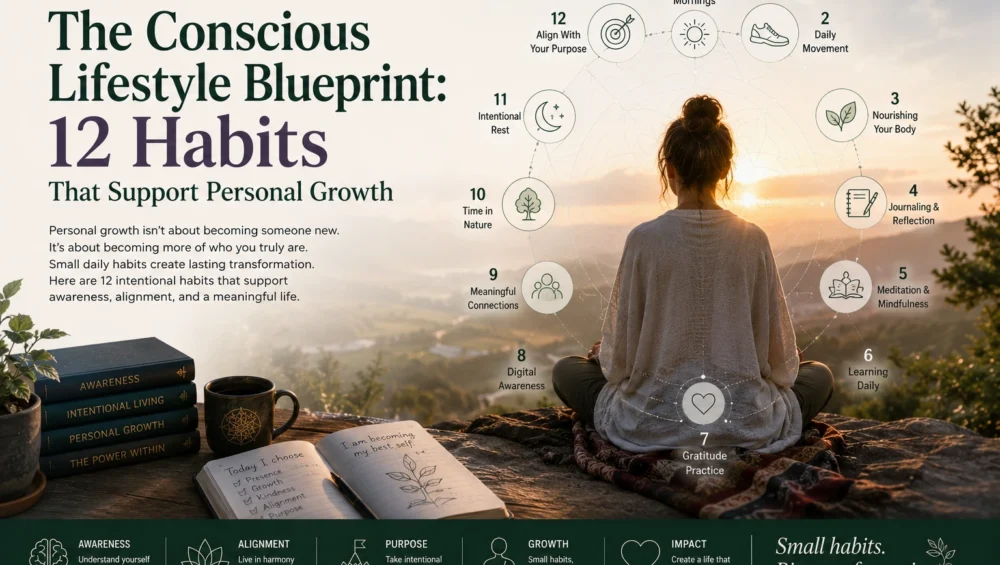
Week 1: Observe

Ask;

  • What feels energizing?
  • What feels draining?

Week 2: Reflect

Journal;

  • What patterns appear?

Week 3: Adjust

Introduce one intentional habit.

Week 4: Review

Evaluate progress and continue improving.

Consistency matters more than intensity.

The Future of Psychedelic Wellness

Wellness conversations continue evolving.

People increasingly want;

  • Better information
  • Thoughtful reflection
  • Sustainable habits
  • Educational resources
  • Personal agency

The future of wellness may become less about chasing optimization and more about building awareness.

Educational platforms that combine wellness, mindfulness, research and practical reflection will likely continue to grow.

Frequently Asked Questions

What is psychedelic wellness?

Psychedelic wellness is an educational and personal development approach focused on mindfulness, intentional reflection, wellness education and conscious living.

Interest in mindfulness, personal growth and wellness education has increased broader awareness and discussion.

Is psychedelic wellness only about research?

No. Wellness discussions often include reflection, mindfulness, habit development and educational exploration.

How do beginners start?

Start with simple practices such as journaling, meditation, wellness planning and self-reflection.

What are good wellness habits?

Mindfulness, consistency, intentional routines, reflection and sustainable personal growth practices.

Final Thoughts

Psychedelic wellness is becoming part of a larger movement toward intentional living.

People are increasingly searching for ways to develop awareness, improve wellbeing and create sustainable personal growth.

Whether through mindfulness, reflection, education or conscious living practices, wellness begins with paying attention.

And meaningful change often begins with one small intentional step.

The Psychedelic JournalCategoriesConsciousness and Mindfulness Personal Growth and Mental Wellness Psychedelic Integration Psychedelic Research Psychedelic Wellness

The Alchemist’s Notebook: Why Keeping a Psychedelic Journal is a Game-Changer

Introduction: From Ineffable to Actionable

One of the most common words used to describe a profound psychedelic experience is “ineffable”—a state of being too great or extreme to be expressed in words. Psychedelic journal; While this is true, the magic doesn’t have to vanish when the experience ends. The insights, emotions, and novel perspectives gained during your research are like rare and precious elements. To truly benefit from them, you must find a way to capture and integrate them into your life.

This is where the simple, humble practice of journaling becomes an alchemist’s most essential tool.

What Is a Psychedelic Journal?

A psychedelic journal is more than just a diary; it’s a dedicated laboratory notebook for your consciousness. It’s a space to document, process, and ultimately, understand your journeys. Here at Psychedelics Solution, we believe that the “work” of a psychedelic experience often begins when the acute effects wear off. A journal is your guide for that next, crucial phase.


Before the Journey: Setting the Stage

Your journal’s role begins before you even consume a substance. This pre-journey documentation helps you solidify your “set” (your mindset) and clarify your intentions; psychedelic reflection promts.

What to write before your experience- Psychedelic self discovery:

  • Your Starting Point: Document your current life situation. What are your joys, your challenges, your pressing questions? What is your emotional and psychological state in the days leading up to the experience?
  • Your Intentions: Write down what you hope to explore. Frame these as open questions rather than demands. For example, instead of “I want to solve my anxiety,” you might write, “I want to explore my relationship with anxiety” or “I am open to understanding the roots of this feeling.”
  • Your Dose and Substance: Note the specific substance and the exact dosage you plan to research. This is crucial for consistency and learning. Journaling after psychedelic experiences

During the Experience (If You Can): Capturing Fleeting Moments

This can be challenging, and you should never force it. Interrupting a profound state to write can be counterproductive. However, sometimes a simple word, a sketch, or a single phrase can act as a powerful anchor to a complex memory later on.

Tips for journaling mid-experience:

  • Keep it brief. A single keyword (“connected,” “geometry,” “forgiveness”) can be enough.
  • Don’t worry about grammar or legibility. This is for you alone.
  • Consider a voice recorder. Speaking can sometimes be easier than writing. You can transcribe it later.
  • A sketchbook can be invaluable if your experience is highly visual.

After the Journey: The Integration Phase

This is where your mindfulness journal truly shines. As soon as you feel able and clear-headed (often the next day), set aside time to write freely about your experience.

What to write after your experience:

  • The Narrative: Describe what happened from beginning to end, as best as you can remember. What did you see, feel, and think? Don’t censor yourself. Write down the strange, the beautiful, the confusing, and the challenging parts.
  • Key Insights and ‘Aha!’ Moments: Did any particular thoughts or realizations stand out? These are the gems. Write them down in as much detail as possible before they fade.
  • Emotional Resonance: How did you feel? Explore the full spectrum of emotions without judgment. Did you feel joy, grief, confusion, or peace?
  • Connecting to Your Intention: How did the experience relate to the intentions you set beforehand? The connection might be direct or highly symbolic.
  • Actionable Steps: This is the most critical part. Based on your insights, what is one small, tangible action you can take in the coming week? If you explored your relationship with nature, maybe the action is to take a walk in the woods. If you felt a sense of connection, maybe it’s reaching out to a friend.

The Ongoing Practice/ Psychedelic wellness Practices

Your journal isn’t a one-time report. Re-read your entries a week, a month, or even a year later. You will be amazed at how your understanding of the experience deepens and evolves over time. These entries create a personal map of your consciousness, revealing patterns, growth, and the beautiful, intricate path of your own unique journey also known as personal growth journaling.

By documenting your explorations, you transform a fleeting experience into a lasting tool for personal growth. You become not just a tourist of your own mind, but an active, engaged cartographer.

Disclaimer: This article is intended for educational purposes only and does not constitute medical advice. Psychedelic substances involve risks and are subject to legal restrictions which vary by location. Please ensure you are in compliance with all local laws and prioritize your health and safety.


Top rated products

Introduction to MicrodosingCategoriesMicrodosing Education Neuroscience Psychedelic Research Psychedelic Wellness

The Subtle Shift: A Responsible Introduction to Microdosing

Introduction to Microdosing: Beyond the Breakthrough Experience

When most people think of psychedelics, they imagine profound, reality-altering journeys. But there is another, rapidly growing area of interest that doesn’t involve visions or intense introspection. It’s a practice that operates at the very edge of perception: microdosing.

What is microdosing?

In simple terms, it is the practice of regularly taking a sub-perceptual dose of a psychedelic substance—typically 1/10th to 1/20th of a recreational dose. The goal is not to “trip” or feel any overt psychoactive effects, but to experience subtle, positive shifts in one’s daily life.

Here at Psychedelics Solution, we believe in providing clear, balanced information. Let’s explore the what, why, and how of this nuanced practice.


The ‘Why’: Potential Reported Benefits

The surge in interest around microdosing is fueled by a wealth of anecdotal reports from individuals in fields ranging from Silicon Valley to creative arts. They often seek benefits such as:

  • Enhanced Creativity & Flow: Many report an easier time connecting ideas, thinking outside the box, and entering a productive “flow state.”
  • Improved Focus: Some users find it helps them stay engaged and less distracted by mental chatter.
  • Elevated Mood & Resilience: A common report is a general sense of well-being, increased optimism, and a greater capacity to handle daily stressors.
  • Increased Empathy: Users sometimes note a heightened sense of connection to others and a more open-hearted perspective.

A Crucial Caveat: It is essential to approach these claims with a healthy dose of scientific curiosity. While formal research is accelerating (with institutions in Switzerland and around the world leading the way), much of the current evidence is anecdotal. Individual results can vary dramatically, and the placebo effect can play a significant role.


The ‘How’: Common Protocols & The Importance of Precision

Microdosing is a practice of subtlety and precision. Since the goal is to operate below the threshold of psychedelic effects, the dosage is everything.

The Fadiman Protocol: Developed by Dr. James Fadiman, a pioneer in psychedelic research, this is the most widely known protocol. It’s designed to prevent tolerance buildup and encourage conscious observation.

  • Day 1: Dose Day. Take your microdose in the morning.
  • Day 2: Transition Day. Do not take a dose. Observe any lingering effects or changes.
  • Day 3: Normal Day. Do not take a dose. This provides a baseline to compare against.
  • Day 4: Repeat the cycle.

The Key Principle: Start Low, Go Slow. A true microdose should not impair your ability to go about your daily activities. If you feel overt psychedelic effects, your dose is too high. It’s always best to start with an even smaller dose than you think you need and adjust slowly.


Best Practices for Responsible Research

If you are exploring microdosing, approaching it with the mindset of a careful researcher will yield the most benefit and ensure the greatest degree of safety.

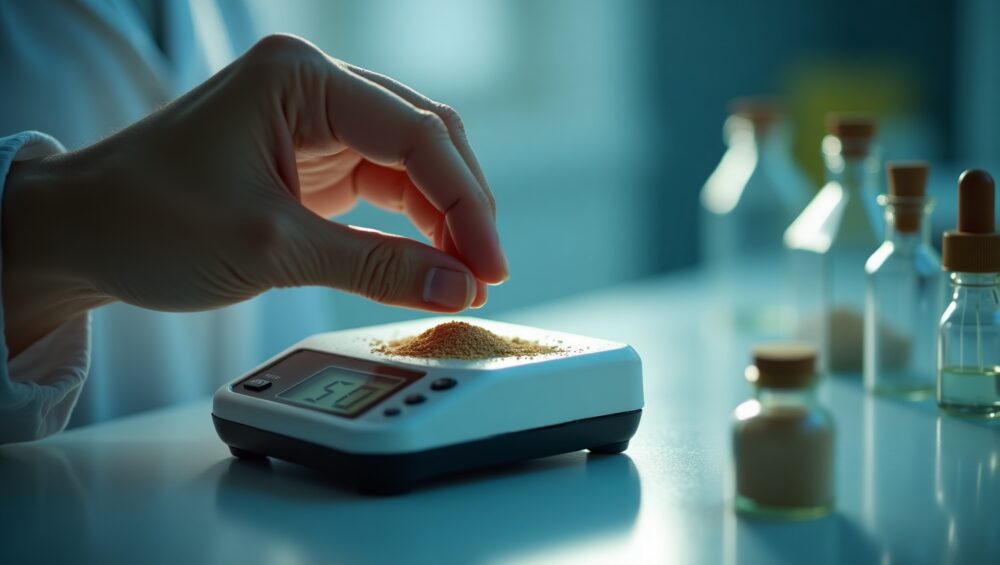
  1. Measure with Precision: Do not eyeball your dose. A high-precision digital scale (that measures to 0.001g) is an absolutely essential tool for consistency and safety.
  2. Keep a Detailed Journal: This is non-negotiable. Track your dose, your mood, your energy levels, your creativity, and your sleep. Only through careful documentation can you learn how it truly affects you.
  3. Know Your Source: The consistency of your research material is critical. An accurately dosed, professionally prepared product ensures that you are not dealing with unknown variables in potency from one dose to the next.
  4. Listen to Your Body: Take regular breaks. Many users follow a protocol for 4-8 weeks and then take a few weeks off to reset and integrate their observations. Microdosing is not meant to be a permanent, daily supplement.
  5. Prioritize Your Health: As with any psychoactive substance, consult with a trusted healthcare professional, especially if you have a pre-existing condition or are taking any medications (particularly SSRIs or other psychiatric drugs).

Microdosing is not a magic pill, but a tool for subtle self-observation and potential enhancement. When approached with respect, precision, and intention, it can be a fascinating area of personal research.


Disclaimer: This article is provided for educational and harm reduction purposes only. It is not medical advice. The legal status of psychedelic substances varies by jurisdiction, and you are solely responsible for complying with your local laws. Always consult with a healthcare professional before starting any new regimen or if you have health concerns.